Mining
The Job Somebody
Currently Does by Hand
Designing a machine that has to work first time in a position a person should not occupy is the same problem we solve subsea. We use a phased approach through concept, FEED, detailed design, fabrication and testing to ensure that we meet the brief, delivering bespoke equipment that works for your unique circumstances.
The Mining Problems That Come Through the Door
-
Manual handling designed out
A change-out done by hand, or by hand with a Hiab assisting, in a position a risk assessment keeps flagging.
-
Wear surfaces repaired in place
Survey, hard-face weld and grind finish inside structures that are awkward to enter and expensive to take out of service.
-
Handling for sections nobody lifts twice
Purpose-built handling and change-out machinery for parts that no standard rigging arrangement covers.
How We Structure a Development
Bespoke development is difficult to buy because the price of the work cannot be known until some of the work has been done. Our approach follows the same six stages set out on the capabilities page. The challenge is developing a plan that aligns the commercial gates with the milestones to match the approval and investment framework. We have the experience and understanding to offer fixed price proposals for well defined scopes, and the flexibility to find alternative delivery models when that doesn't fit.
Development
Design
and Test
and Onsite
Two Mining Scopes, Engineered Through FEED
Automated drill bit exchange
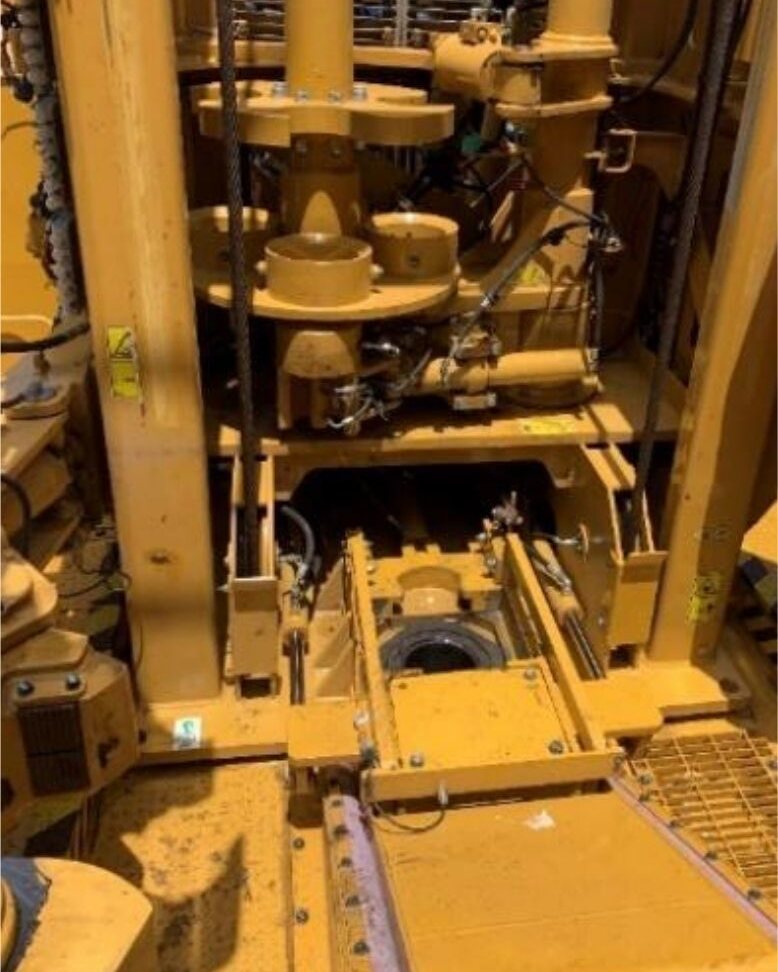
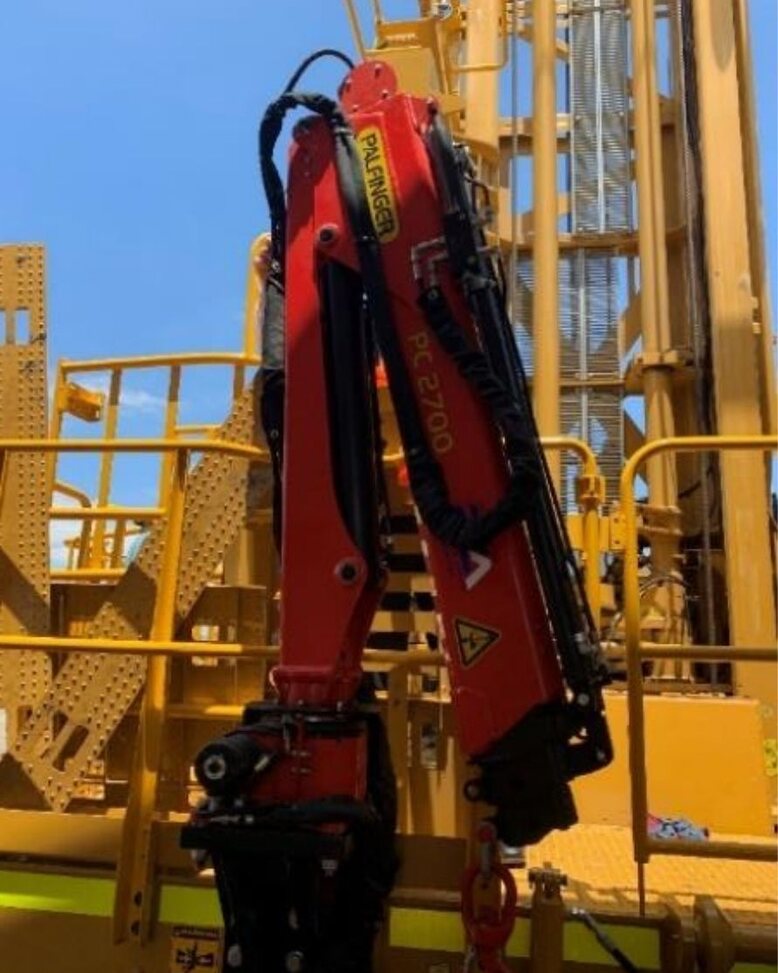
The drill bit is removed from the torque reaction bed by hand, or by hand with a Hiab arm assisting. The customer asked us to investigate a system that takes the manual handling out of the exchange entirely.
Functional requirements were developed to guide the design, and a test environment with a Hiab crane was set up. Design solutions to meet each of the requirements were developed, along with the broader context of the site and the service and support constraints that come with it. The project has been approved for detailed design, prototype delivery and field testing and is currently in progress.
Automated TLO re-lining
Ore-train loading and offloading hoppers wear from the inside, and repairing them means putting a person into a large confined structure with a welding set. Blakemere designed a bespoke robotic hard-facing machine to survey the internal surface, weld-repair the damaged and deteriorated areas, grind the finish, and handle the TLO sections. The technical requirements of the study were met, though the project was not selected to proceed to prototype build and testing.
Proven in the World's Most Demanding Environments
For more than 20 years, Blakemere has engineered purpose-built mechanical solutions for environments where access is difficult, conditions are unforgiving and conventional equipment isn't up to the task.
Our experience in subsea and offshore engineering translates directly to the challenges of mining and heavy industry: designing reliable machinery to perform complex tasks in confined, hazardous and hard-to-reach locations.
From initial concept through to assembly and testing, we turn difficult engineering problems into practical, field-ready solutions. Our Welshpool facility in Perth supports equipment assembly, load testing and pressure testing, backed by an established network of Western Australian machining and fabrication partners.
Our chemical bunkering hose spooler, developed for operations in Darwin, demonstrates this approach—eliminating the need for a mobile crane and reducing manual handling through purpose-built mechanical engineering.
Explore our case studies, discover our integration and testing capabilities, or talk directly with our engineering team about a challenge that conventional equipment can't solve.
Common Questions About Mining Work
Why would a subsea engineering company design mining equipment?
The brief is the same: a machine that has to work first time, in a position a person should not occupy, where nobody can easily reach it if it stops. Blakemere has spent more than twenty years building that kind of machine for subsea use, and mining enquiries come to us for the same reason.
Do your engineers go to site with the equipment?
Yes. Onsite work is the last of the six stages, and the engineers who designed the machine mobilise with it. Assembly, load testing and pressure testing happen beforehand in our own workshop at Welshpool in Perth.