Bespoke Subsea Engineering and Intervention Tooling
The problem can be complex. The solution is bespoke, and simple. We test the brief before we price it, because complexity can be avoided and alternative options surfaced if the specification defines only what’s needed.
How a Bespoke Scope Arrives
Something has stopped working, stopped turning or fallen off. Something has been damaged by a technician, an ROV or a cyclone. Or most of a development is conventional and then there is one element that is not, something novel, something awkward, something the standard scope does not cover.
We take that element and hand it back as working hardware. Concept, design, manufacture and testing run as a single scope in Perth, so what you get back is a tool rather than a drawing handed to someone else to build.
“PTTEP AA was facing the prospect of a saturation diving job to remove and replace several buoyancy modules that had slipped from their installed locations on one of the dynamic risers in the Montara field. We engaged Blakemere to consult on a bespoke intervention tool and they were able to very quickly iterate through several phases of digital prototyping to meet our changing requirements.
… By employing an ROV to execute this work PTTEP AA reduced the safety risk to ALARP and also had the option of selecting a smaller intervention vessel. Thanks to the Blakemere team for a job well done!”
Intervention Tooling in Practice
Three problems that arrived with no product behind them, and what went back offshore.
Wellhead connection system and AX machining tool
A wellhead had to be re-entered and abandoned to current standards, and the sealing faces were gone. In September 2025 that meant a damaged sealing face, no way to seal below the damage, and no means of taking the riser load.
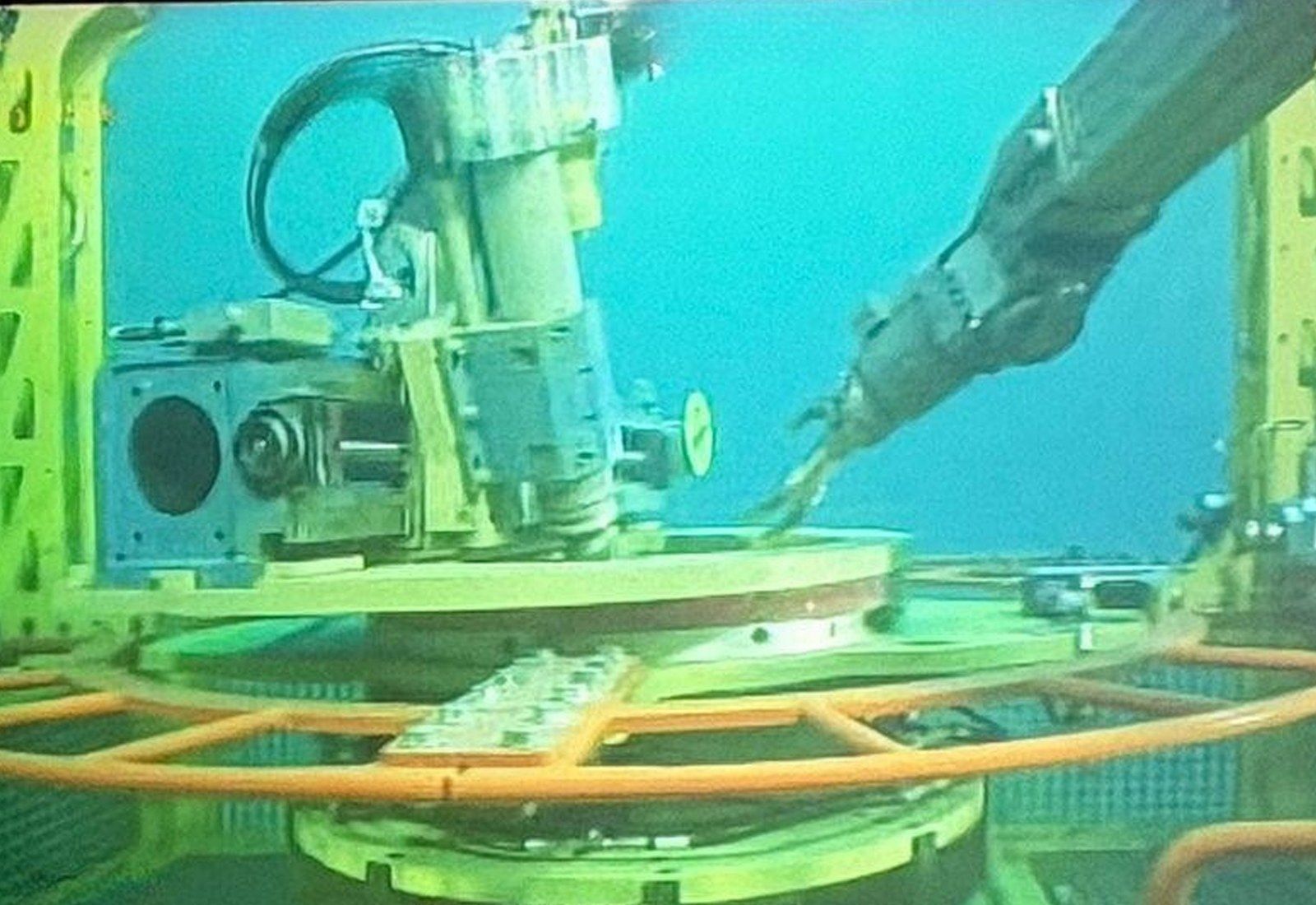
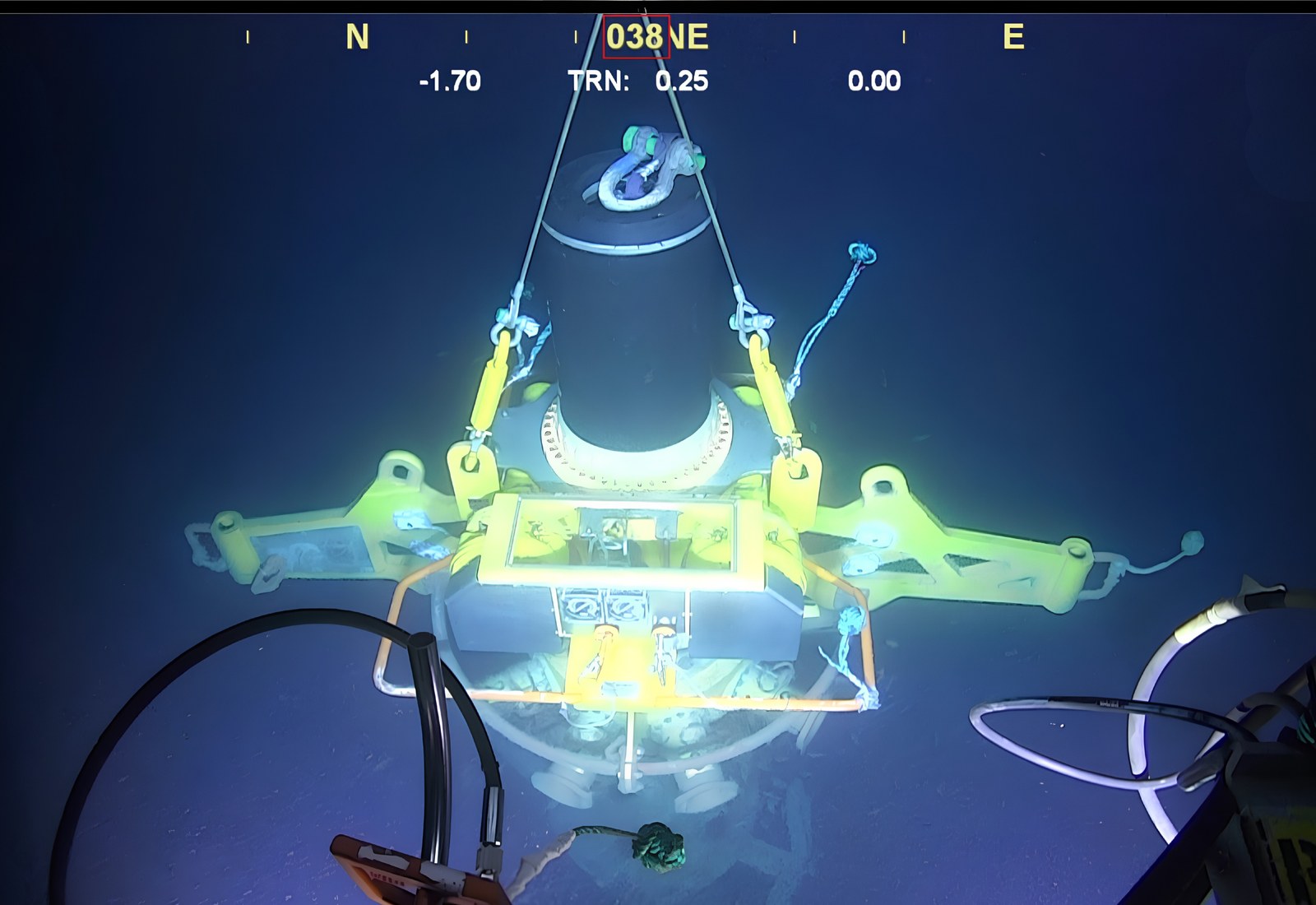
The answer was two pieces of hardware. The AX machining tool, ROV powered and ROV operated, which re-machined the sealing face on the seabed while holding the required AX angle. And the wellhead connection system (WCS), which seals to the internal bore of a 13‑5/8″ housing, locks on with nine latching dogs and verifies itself with a back seal test before the riser is run.
The WCS reacts 2,300 psi of bore pressure, riser bending, riser tension and guide wire loading. The case study sets out how each of those went.
WCS datasheet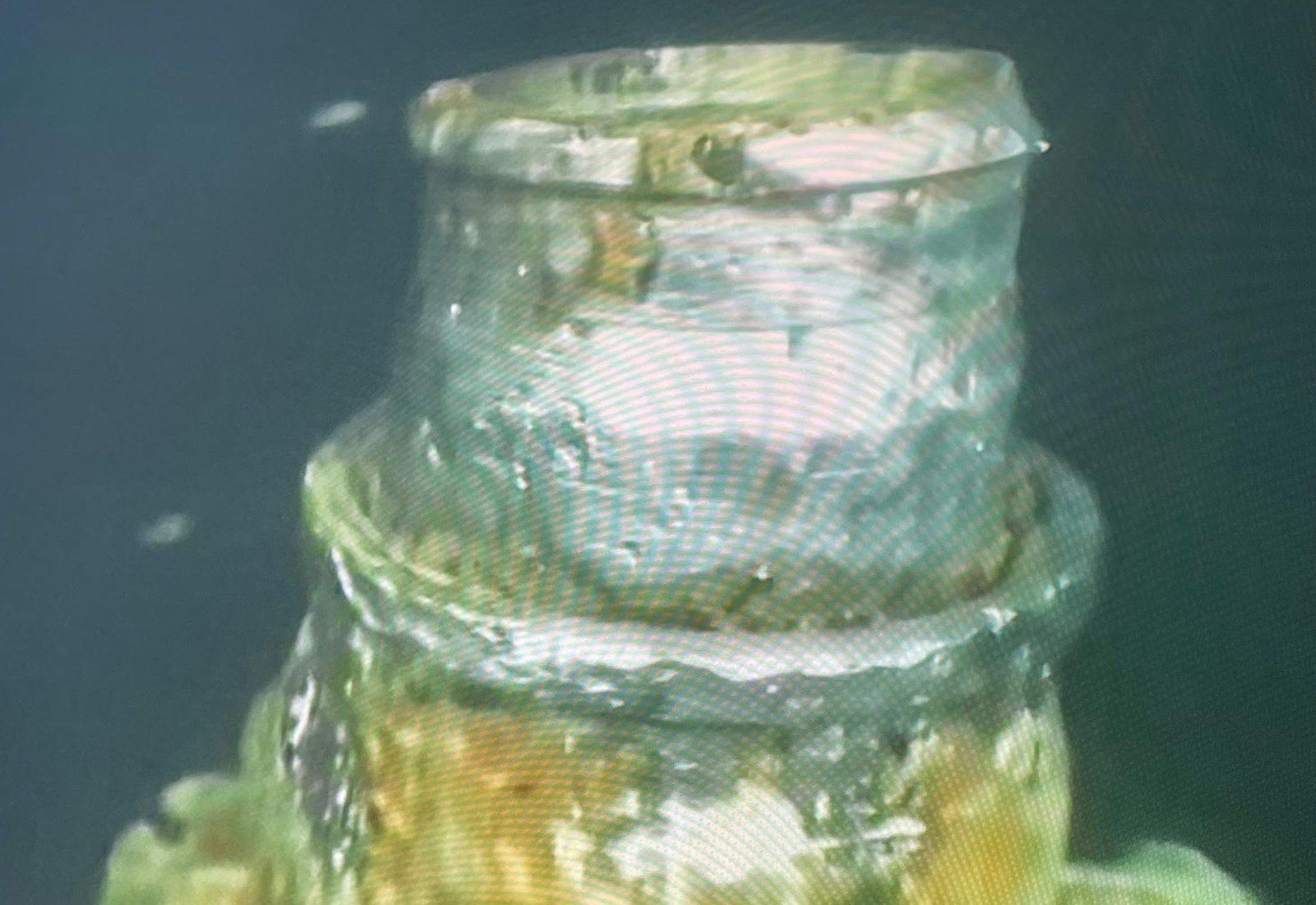
Other Case Studies
Fixing the Fault Without Reterminating the Umbilical
Low insulation resistance faults in a subsea control system normally mean building and reterminating a new umbilical termination assembly. The operator asked instead for something that could be retrofitted to the ones already in the water. What went offshore was a pressure-compensated electrical distribution unit that mounts into or onto the existing UTA, with a field-proven secondary barrier against future water ingress, fitted and tested on the back deck.
Cleaning a Flange to Bare Steel Without a Diver or an ROV
One awkward element inside an umbilical installation. A bend stiffener clamp had to land on bare steel at the bottom of an I-tube beneath an STL buoy, everything had to run from the deck of the FPSO, and everything had to be Zone II rated. Ultra-high pressure jetting on a rotating head cleaned the flange in place.
The Kinds of Subsea Tooling This Produces
The catalogue was built one problem at a time, so it reads as a list of scopes rather than a product range.
- Cutting and severance, including diamond wire saws, friction disc and abrasive cutting, shears and the interface frames that position them
- Recovery and lifting, including grapples, clamps, coupon catching and ejecting systems, and deployment frames sized to the basket and the deck
- ROV intervention, including skids, torque tools and multipliers, subsea drills, nut splitters, grinders and machining tools
- Plugging and sealing, from high pressure double seal arrangements to permanent non-metallic debris plugs
- Offshore support, including zone-rated hydraulic power units, control stands, umbilicals and camera systems
Roughly
Two thirds
ZeroStab, leak-free, high-flow hydraulic connection
ZeroStab is a subsea hydraulic connector that uses laser-sintered metal additive manufacturing to break a design ceiling the offshore industry has lived with for decades. It is named ZeroStab because its design comes as close to zero leakage and zero pressure drop as physics will allow.
Industry-standard ISO and API interface geometry has been locked in for decades, with conventional hot stabs typically machined from exotic stainless alloys such as Monel and Inconel. That manufacturing route forces long, straight internal drillings that choke fluid flow, and any attempt to prevent leakage must be achieved with tiny, lossy valve components.
ZeroStab retains the interface profile that ROV operators and existing female receptacles already accept, so it is a drop-in replacement. Laser-sintered galleries sweep and curve past each other to present a smooth, low-loss flow path that no drilling process could produce.
With packaging constraints relaxed, soft-seated check valves with larger sealing areas can be used, replacing the leak-prone metal-on-metal seats the industry has accepted as unavoidable. The result is gas-tight sealing and reliable performance in the field, where fluid cleanliness cannot be guaranteed.
ZeroStab has been announced as a finalist for the 2026 Western Australia’s Innovators of the Year in the Advanced Manufacturing category.
ZeroStab in detailSubsea Manifolds, designed and fabricated in Perth
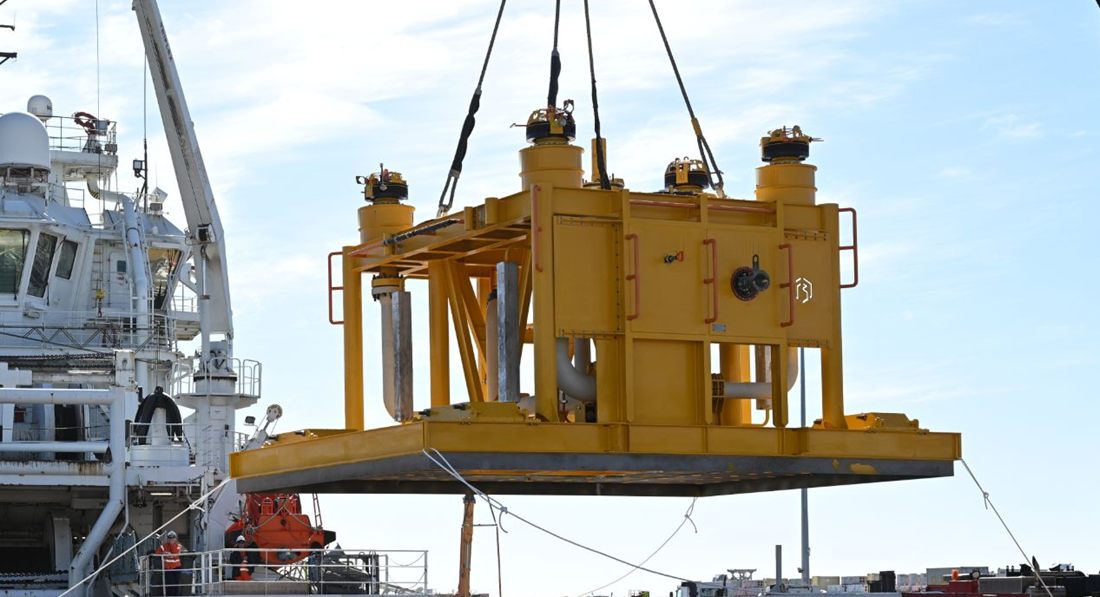
A manifold gathers production fluids, water injection and controls, and it is built to one specific site. That is why they are normally bought from a major vendor on a lead time measured in years, which is no help when the one you already have is compromised.
We were approached on exactly that, an existing manifold whose design life had been significantly reduced. A compliant design was issued in seven months, sized so regional vessels could handle it rather than a heavy-lift spread, and fabricated locally. Seventeen months from first request to completion.
- Piping materials
- Carbon steel, stainless, duplex and super-duplex alloys, solid or CRA lined
- Foundations
- Shallow skirted mudmat, piled, suction or gravity base, single or multi-piece
- Connection systems
- Third-party or Blakemere connection system, with ROV and diver-operated options
- Water depth and temperature
- Designed to the site and to the service conditions

Pressure Retaining and Environmental Plugs
Almost every plug we have built started as a reaction problem. There is nothing to grab. The flange was never dimensioned to be interfaced with, or never dimensioned properly at all. The service is gas, at pressure. And whatever solves it has to stay small enough for an ROV to install, while carrying consistent piston loads inside a weight limit.
The profile we now use across most of the range gives back-seal testing in a single elastomeric element. One seal does work that would otherwise need a separate mechanism, so the plug has fewer parts in it and fewer things to go wrong subsea.
Thirteen plugs for a decommissioning campaign
The problem. Thirteen pressure retaining plugs for JSS 400 and JSS 300 hubs, working pressure 5,000 psi, for a decommissioning campaign.
What we did. Five seal profiles went into type testing before anything was manufactured. All five came from designs that had already worked on previous plug projects, and some were variations on each other so the effect of a single parameter could be measured. Each went through a preliminary regime, the best performer was optimised against that data, and the optimised design went back in for a second round.
What it established. The thirteen plugs were built against a seal with test data behind it. That profile is now the basis of most of the range.
An eight-inch spool plug that standard torque tools could not set
The problem. A spool plug for an eight-inch line where the torque needed to set it was beyond what standard subsea torque tools deliver.
What we did. The installation tool was designed as part of the plug. A commercial high-torque tool sits in a recoverable frame, so the torque comes from the deployment method and the seal design does not have to be weakened to suit a standard tool. The seal profile is the one proven through the type testing above.
Five plugs across three sizes on one scope
The problem. One decommissioning scope covering four fields needed environmental plugs at two inches, twelve inches and 300 to 307 mm, plus subsea pressure retaining plugs at two and twelve inches rated to 103 bar.
What we did. All five were designed, built and tested to one seal philosophy, so the campaign carried a single spares list and a single set of test records across three sizes.
Types we have designed and delivered include:
- High pressure, high excursion, double seal with back-seal test
- Pressure plugs that seal on a curved pipe across a weld seam
- Permanent plugs that seal by injection of a two-part compound
- Permanent debris plugs constructed entirely from non-metallics
- Non-circular plugs for the ballast pockets of a deck transport module
- Flow-by port plugs to improve the efficiency of subsea multi-string cutting
- Permanent down-hole plugging of subsea concrete storage caissons
Hull Plugs, sealed from outside the hull
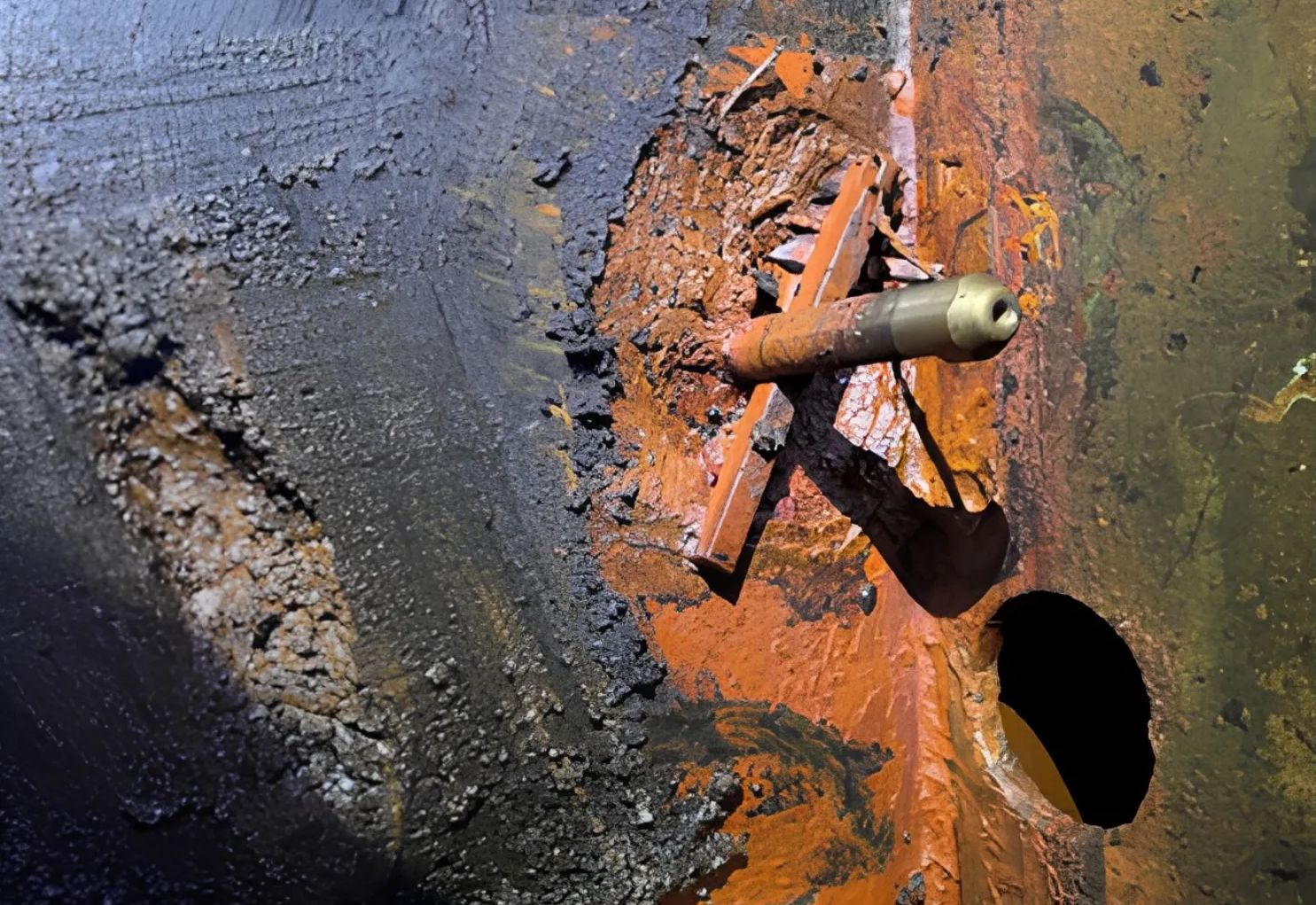
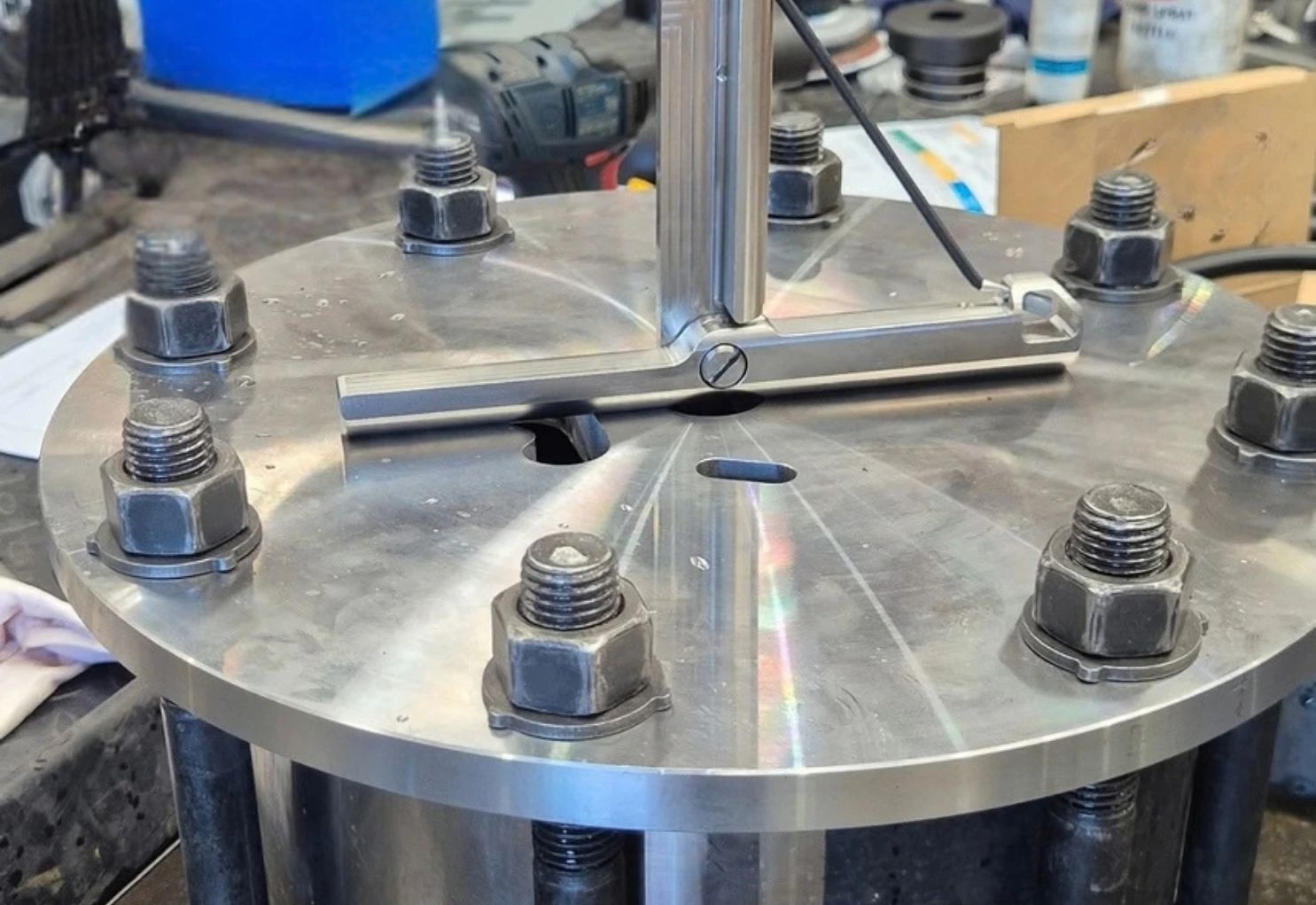
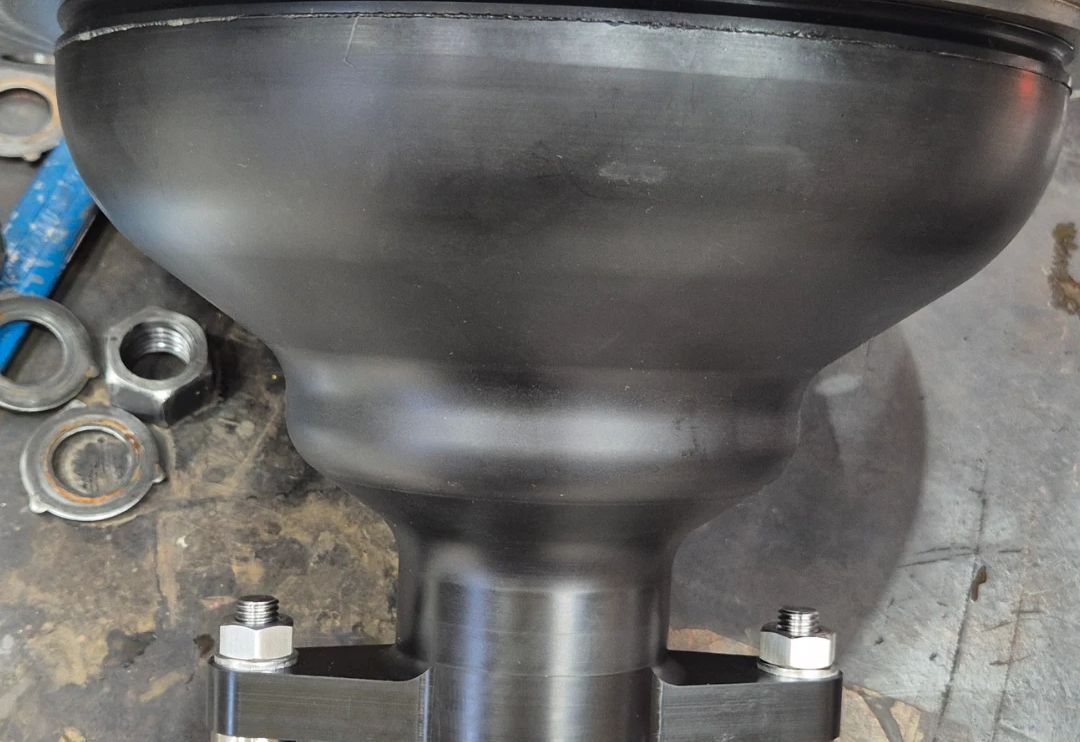
A hull plug seals a perforation from outside the hull, so a flooded compartment can be dewatered and the asset kept in service without drydocking or internal access. Each one is designed to the hull in front of it. What it ends up looking like depends on how many perforations there are and how far they are spread, how the plate curves, what ROV is already on the vessel, and how long it has to last once it is down there.
On a recent scope the perforations were small, numerous and spread across a wide area, with access from outside only and an inspection-class ROV the only vehicle available. Rather than plug each hole, a single Tee Latch installed through one central hole spans and seals the whole affected area. The plug weighs under 1.5 kg in seawater, which keeps it inside an inspection-class payload and off a work-class spread.
Nothing holds the seal in place to begin with. No differential pressure acts across it until dewatering starts, so it has to seat and stay seated on its own. The seal profile was analysed and tested early against hull curvature that varies across the area. The plug is built from thermoplastic and titanium, which keeps it light and gives it a long service life with no cathodic protection connection. Design, testing and delivery were complete within a month.
NORM Filtration, subsea and topside
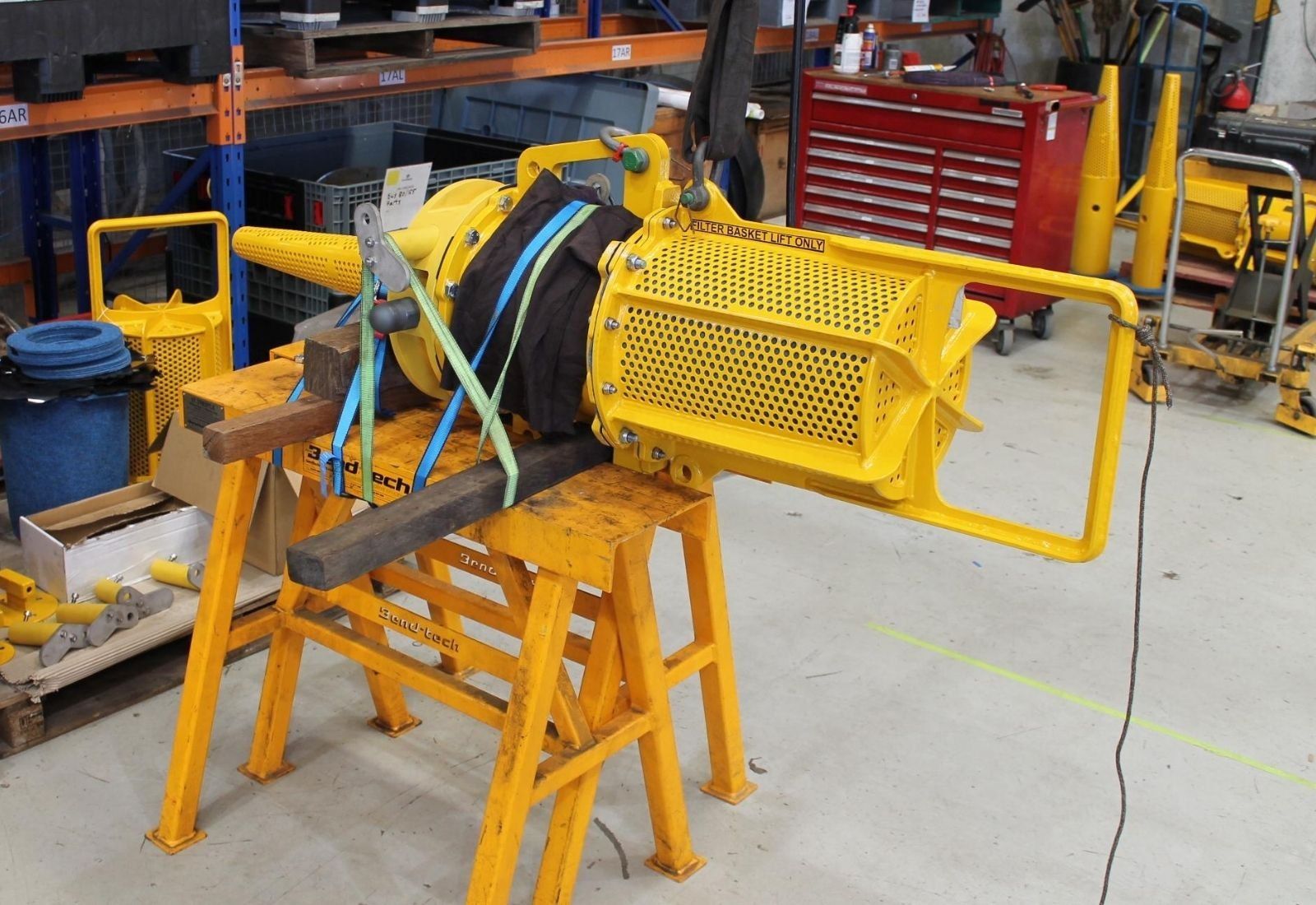
A filtration system that installs onto the subsea end of a recovered pipeline and captures naturally occurring radioactive material scale down to 63 µm, so it does not end up on the deck or back in the water.
The same unit works topside to filter potentially harmful seawater runoff.
Common Questions About Bespoke Subsea Engineering
What happens during concept development and FEED?
A complex job with no obvious starting point is the normal way these things arrive. Concept development, FEED studies and FMEAs settle the path before significant capital is committed, which gives you visibility at the point it matters most. The same principles scale from a single tool to the decommissioning of a subsea field.
What does the detailed design package cover?
Mechanical design, structural and lifting analysis, hydraulic circuit design, and the calculation and documentation package behind them. Designs are checked against the people and machines that operate them, so deck handling, available ROV torque and flow, subsea visibility and the failure modes that matter when nobody can reach the tool are part of the design case rather than an afterthought.
Long-lead items and specialist processes are bought in, but the critical path stays under our control instead of sitting in someone else’s queue.
What documentation is issued with a bespoke build?
A tool on its own is difficult to accept and difficult to defend later, so every build is issued with the record behind it.
- Design records, including calculations, analysis and design review records
- Test procedures and results, witnessed where you need them witnessed
- Materials and traceability carried through fabrication into the as-built package
- Operating documentation written for the crew who will run the tool, not for the file
Do your engineers go offshore with the equipment?
Yes. Our engineers and technicians mobilise with the equipment and operate or supervise it offshore or on site. By the time anything is in the water you have met the engineer responsible for it several times and formed your own view, which is a more reliable basis for confidence than a document.
Can you work from our drawings, or do you start from the problem?
Both, though most of this work starts from a problem statement rather than a design package. We take a scope from concept development and FEED through detailed design, fabrication, assembly and testing, and we can also fabricate to drawings you supply.
How is a first-of-type tool proven before it ships?
Through extended factory acceptance testing, which puts a first-of-type build through full qualification rather than confirming it matches a drawing. Later units of the same build need only a standard FAT. Qualification runs in our own testing centre at Welshpool with our engineers on the test floor, so a change found there goes straight back to the person who drew the part. See the testing centre.
Where is the design and fabrication done?
In Perth, Western Australia. Design at our Kewdale office, fabrication and machining by long-standing Western Australian suppliers we audit, then assembly, testing and qualification in our own workshop at Welshpool. We hold the whole scope, so it is one contract and one interface.