Taking the Cranes Out of Chemical Bunkering
Four-inch chemical hoses were being lifted over a vessel’s gunwale by mobile crane and by hand. We replaced the method with a modular reel system a forklift can reconfigure.
- Client
- Baker Hughes
- Location
- Darwin, Northern Territory
- Delivery
- —
- Sector
- Energy
- 4″ Chemical transfer hose
- >4 m Lift from wharf to gunwale
- Modular Reels exchanged by forklift
- Pneumatic Rotary drive and lifting arm
The problem
We were approached to devise a way of managing 4″ chemical transfer hoses from the wharf, over the gunwale of a vessel alongside, during bunkering operations. Depending on the vessel and the tide, the gunwale was over four metres above the level of the wharf. Hose management was formerly achieved with manual handling and mobile cranes.
A number of different chemicals require bunkering, some of which are corrosive, and that necessitated special consideration to guard against corrosion and spills.
What we built
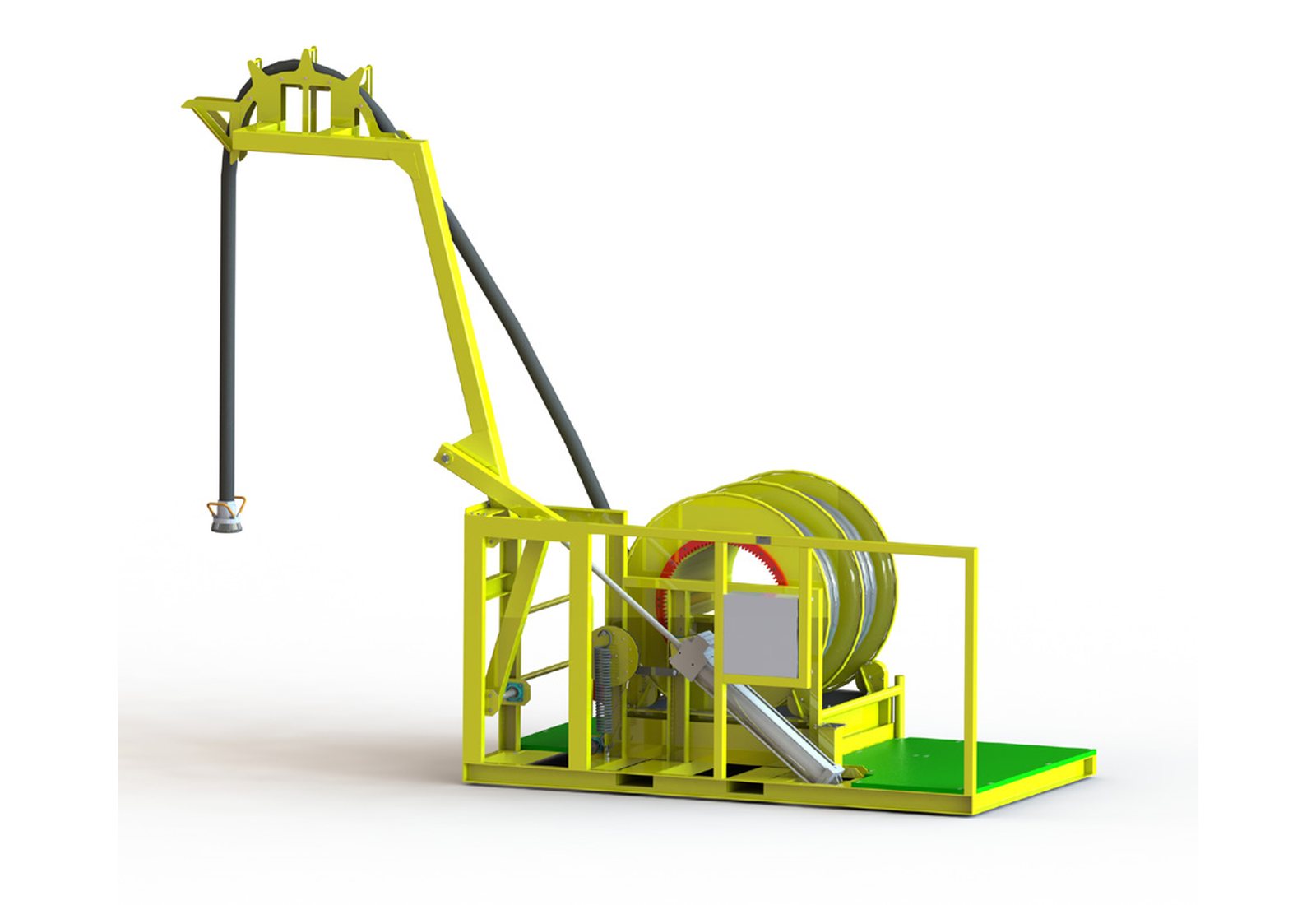
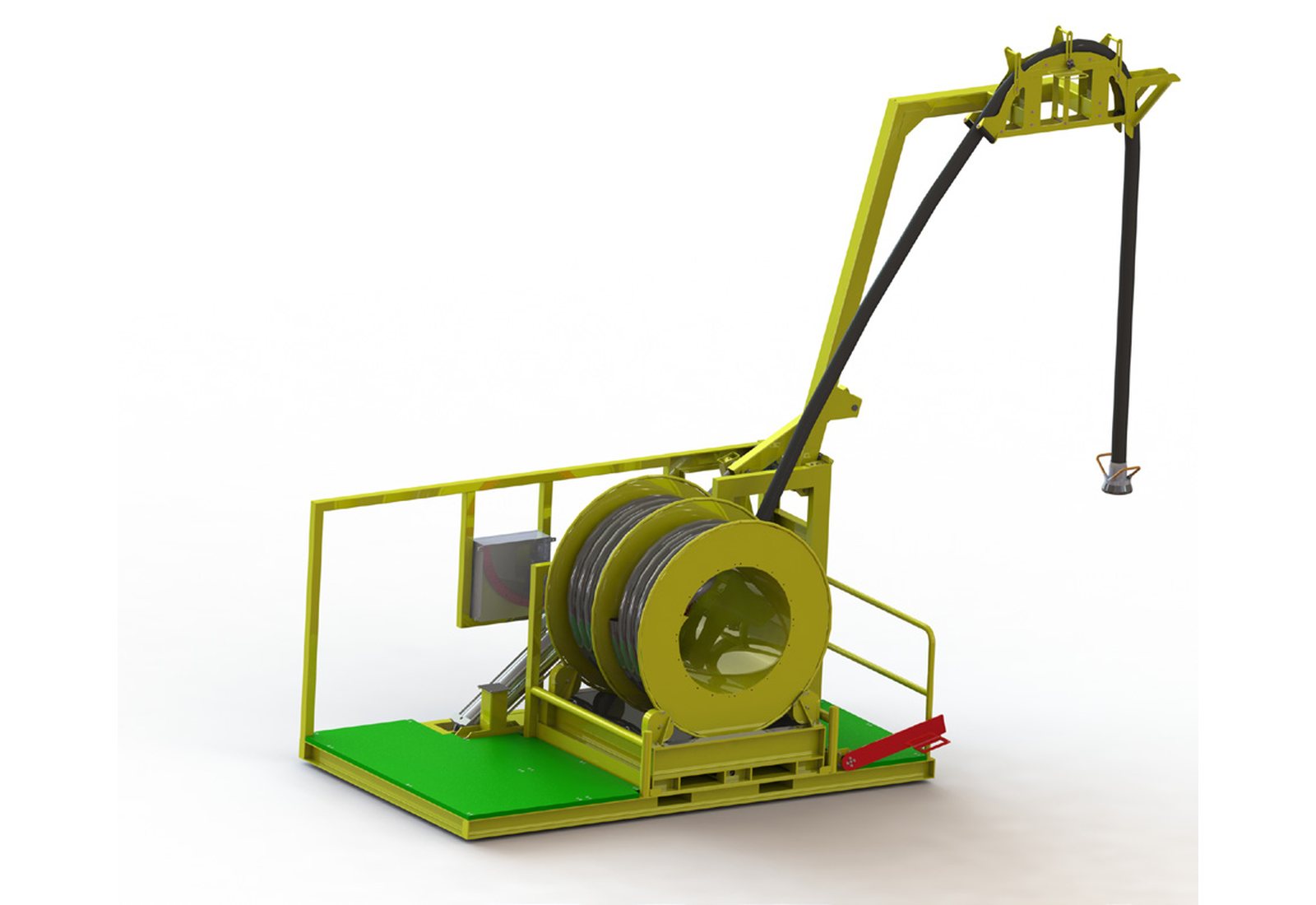
Because a number of different hoses required management, a modular system was devised that allowed dedicated hose reels to be dropped onto a common deployment mechanism. That strategy reduced initial expenditure — one mechanism, several reels — and allowed the operator to change the fluid being transferred quickly by exchanging reels with a forklift.
A pneumatic rotary drive system deploys and recovers the hose from the reel, greatly reducing manual handling. A pneumatically driven arm mechanism lifts the hose to the required position above the gunwale, from where it can be accessed by technicians on the ship.
Designing for people rather than ROVs
Historically our tools are designed to be operated by ROVs, so fresh considerations arose when designing equipment to be used by technicians quayside. Safety mechanisms to prevent the reel being lifted away while the drive system is engaged, safe working platforms, guards and ergonomic design were among the features used to keep the operators safe. None of those are considerations on a subsea tool.
Outcome
A working solution for a new client in a non-traditional market, reached by applying existing engineering knowledge rather than by developing a new product line.
Delivered under our former name, Proserv Australia.
EnergyHave Something With the Same Shape?
If the constraint above looks like yours, ring us and ask how it went. That is a shorter conversation than a capability statement.
Start a Conversation