One Metre Through 1.8 Metres of 1903 Concrete
A civil EPC contractor needed a one-metre hole drilled underwater through a heritage dam wall, to ±10 mm, without putting anything into Perth’s drinking water. Nothing off the shelf was close.
- Client
- Clough
- Location
- Mundaring Weir, Western Australia
- Delivery
- 6 months
- Sector
- Marine & Civil
- 1 m Diameter of the penetration
- 1.8 m Of 120-year-old reinforced concrete
- ±10 mm Positional tolerance to the new liner
- 2.7 t Concrete coupon recovered up the well
Background
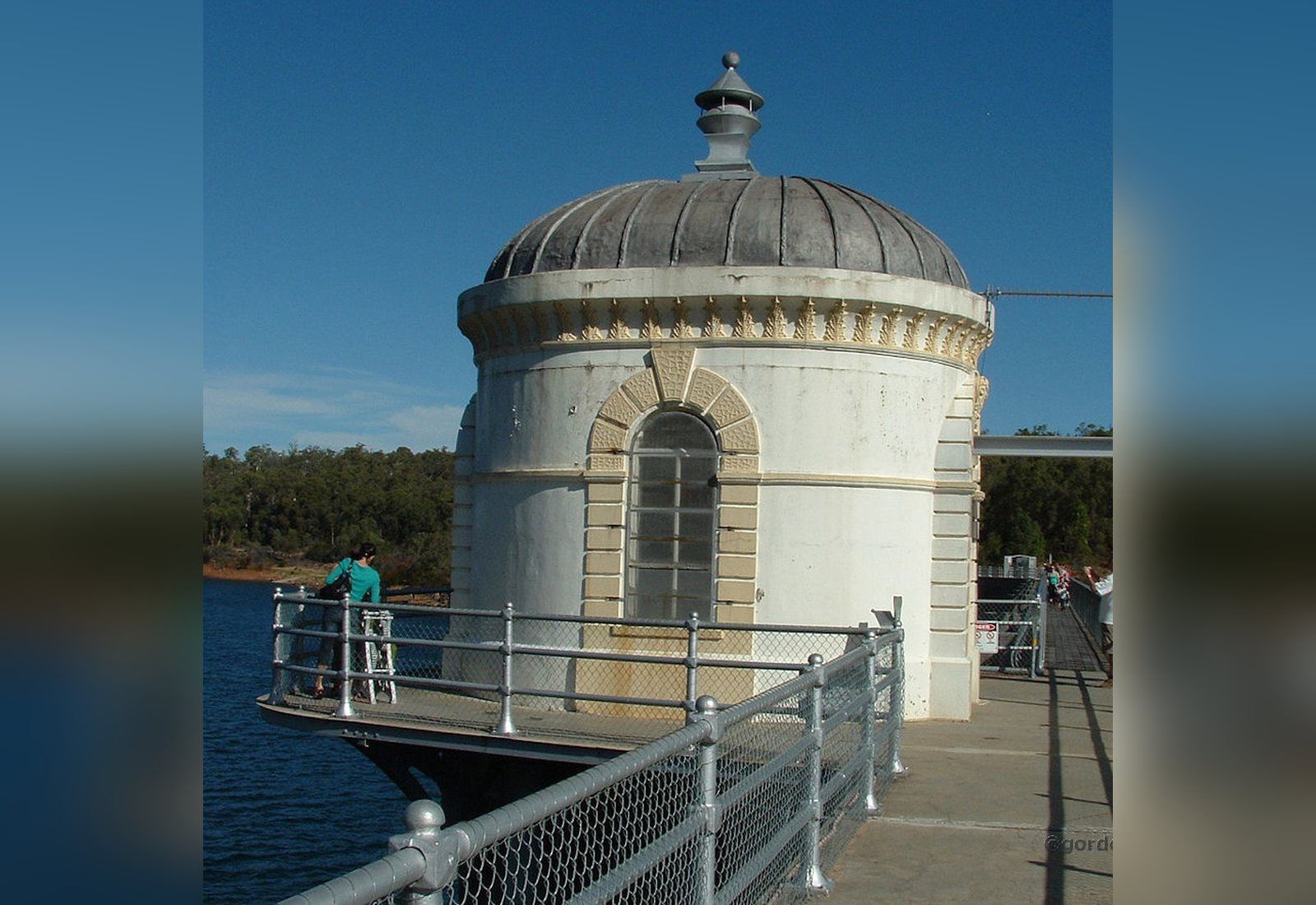
Mundaring Weir is the head of the pipeline that distributes water to agricultural towns in the wheatbelt and as far as the goldfields, approximately 600 km east of Perth. It opened in 1903 and, besides a campaign to raise the level of the wall in the 1940s, has remained largely unchanged.
As part of a large rectification and remediation campaign the original water intakes within the wall were removed and a new intake system installed. The existing dry well sits underneath the heritage-listed round house at the top of the intake tower. It was to have a 2.7 metre diameter stainless steel liner installed and be converted into a wet well, flooded by a new penetration through the concrete wall into the main body of water. That penetration is what Clough approached us to make.
The requirement was to drill a one-metre diameter hole through 1.8 metres of 120-year-old concrete reinforced with granite boulders. Positional accuracy relative to the new liner was ±10 mm, with similarly tight tolerances on the diameter and heading of the hole.
Why it was hard
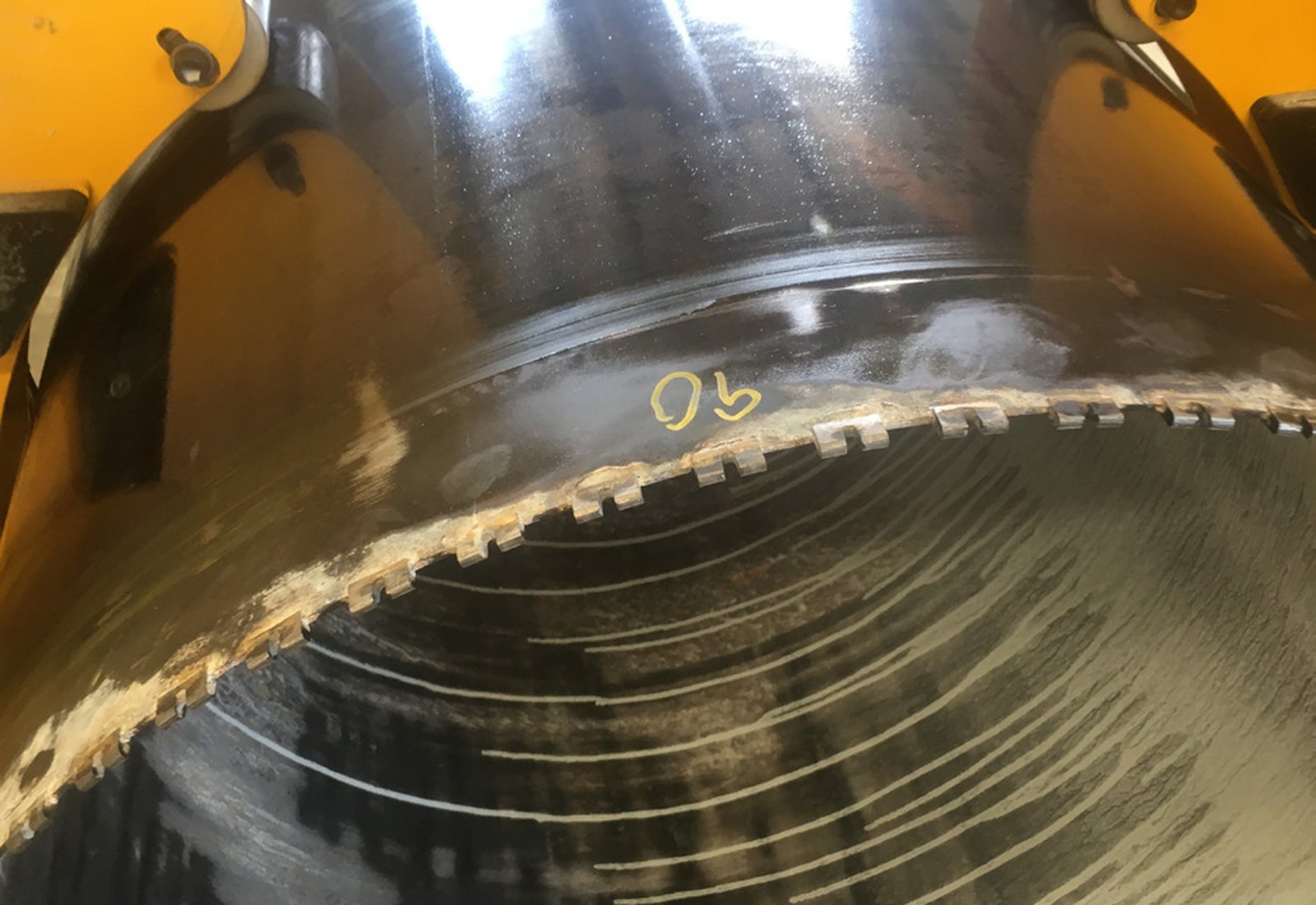
The diamond drill drum we designed and built is larger than any currently produced by the usual manufacturers — Husqvarna, Tyrolit and the like — and its underwater application at that diameter is a world first.
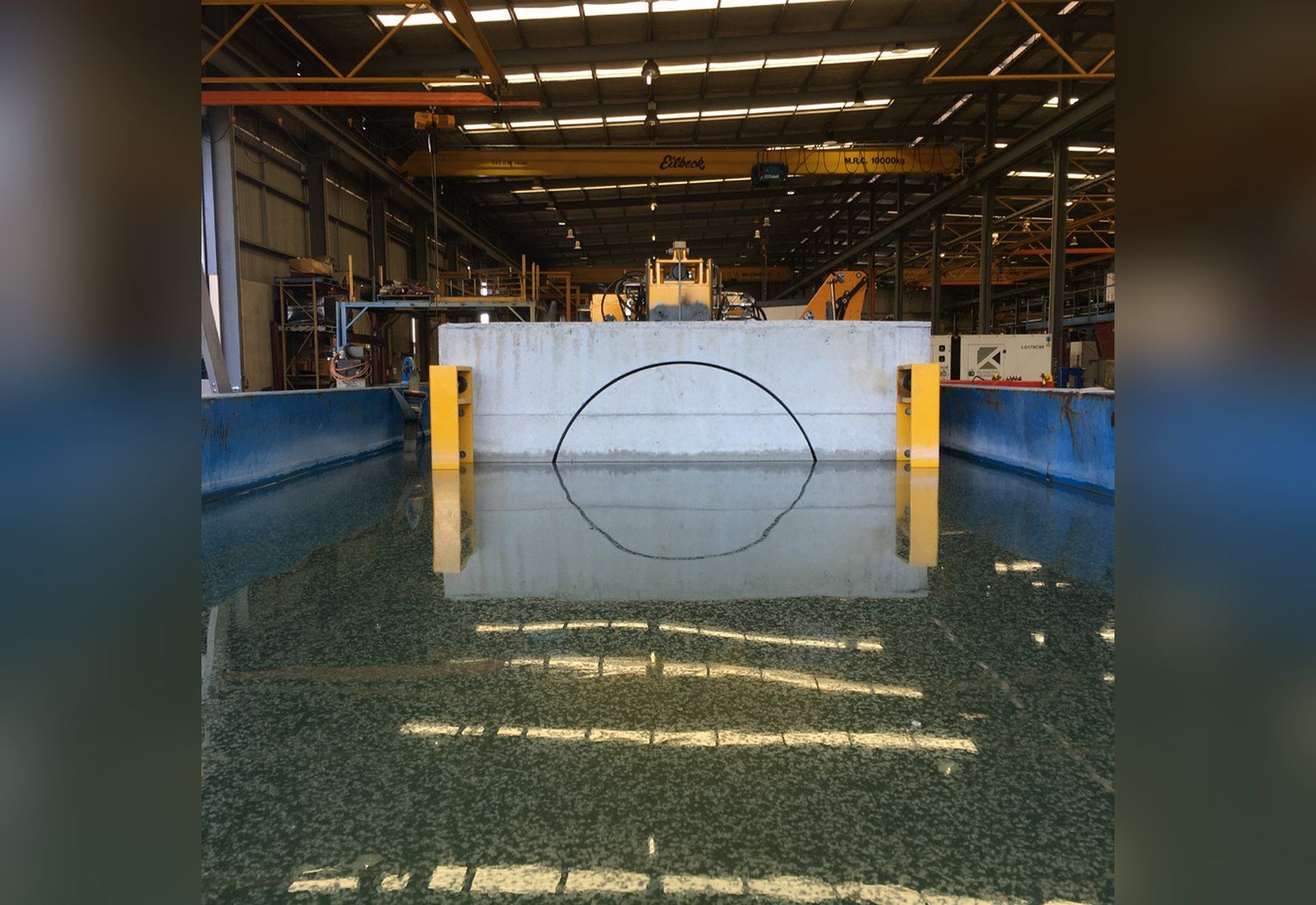
The largest unknown was how the concrete would behave during cutting. The wall was cast in lifts of 300 mm and it was not known how those laminations would behave once cut through. Nor was it known what would be found inside it: granite boulders were likely, but railway line and timber were also possible. A number of trial cuts were conducted on cast concrete blocks of representative strength, filled with granite taken from around the weir site.
The tool had to be compact enough not only to fit down the well, but through the door of the heritage-listed structure on top of the wall. The width of that door was only slightly larger than the diameter of the hole to be drilled.
The design also had to take into account possible contamination of the drinking water supply of a large city, and that fed directly into the selection of methodology and materials.
What we did
An exhaustive FMECA — failure mode, effects and criticality analysis — was carried out in consultation with the client and the Water Corporation. It determined the direction of the cut: deploy the tool down the well and drill outwards, rather than start outside and drill inwards. It also identified the most appropriate cutting methodology and the contingency requirements in the event of failure.
The finished system comprised two main components. A landing porch was installed down the well at the location of the cut by rope access technicians. The porch used features within the well to establish the cut location accurately, which delivered the positional tolerance, and gave the rope technicians a stable working platform inside the well. The cutting tool was then lowered down the well, sat on top of the porch, and was controlled by a technician on top of the wall.
On completion of the cut, the coupon of concrete — approximately 2.7 tonnes — was dragged out of the hole and recovered up the well to the surface.
Why it belongs here
Different sector, different client, no seawater. The engineering problem was the one we deal with routinely: confined space, poor visibility, limited intervention, novel technology, and no realistic opportunity for a second attempt. The scope was our first with this client and in this sector, and it extended existing technology into a new application and a new magnitude.
Delivered under our former name, Proserv Australia.
Bespoke EngineeringHave Something With the Same Shape?
If the constraint above looks like yours, ring us and ask how it went. That is a shorter conversation than a capability statement.
Start a Conversation