Sampling a Well Without Opening It
Two appraisal wells drilled in 1969 had to have their plugging verified before the caps came off. Land-based hot tapping is routine. Doing it subsea, through a well cap, by ROV alone, was not.
- Client
- Fugro, for Shell Todd Oil Services
- Location
- Maui field, 30–50 km WSW of Opunake, New Zealand
- Delivery
- 8 months; offshore complete April 2018
- Sector
- Subsea & Offshore
- 8 months Go-ahead to qualified system
- 1/2″ Initial tap, 2″ contingency
- 1969 Year the wells were drilled
- ROV only No diver intervention at any stage
The problem
The Maui field was discovered in the 1960s, resulting in the drilling of one exploration well and two appraisal wells in 1969. The appraisal wells were left in a suspended state with the wellheads capped. Nearly fifty years later, before the caps could be removed and abandonment completed, the integrity of the plugging needed to be verified. That meant monitoring and sampling any product that might be under the cap, without removing the cap from the wellhead.
Land-based hot tapping operations are commonplace, with a number of vendors able to supply equipment supported by extensive track records. Subsea, that is not the case. The hot tapping equipment that exists for subsea use is typically much larger and used on pipelines. Nothing on the market addressed a small-bore tap through a well cap, which drove the need for a bespoke solution.
The requirement
- Drill a small hole, 1/2″, through the wall of a well cap and contain pressure with a double block and bleed valve arrangement.
- Retain the ability to increase the hole to 2″ and drill a second at 180 degrees, in the event the well needed to be killed.
- Provide a system whereby a sampling skid could be connected to take samples and monitor the well.
- Install, operate and monitor all equipment by ROV alone.
What we built
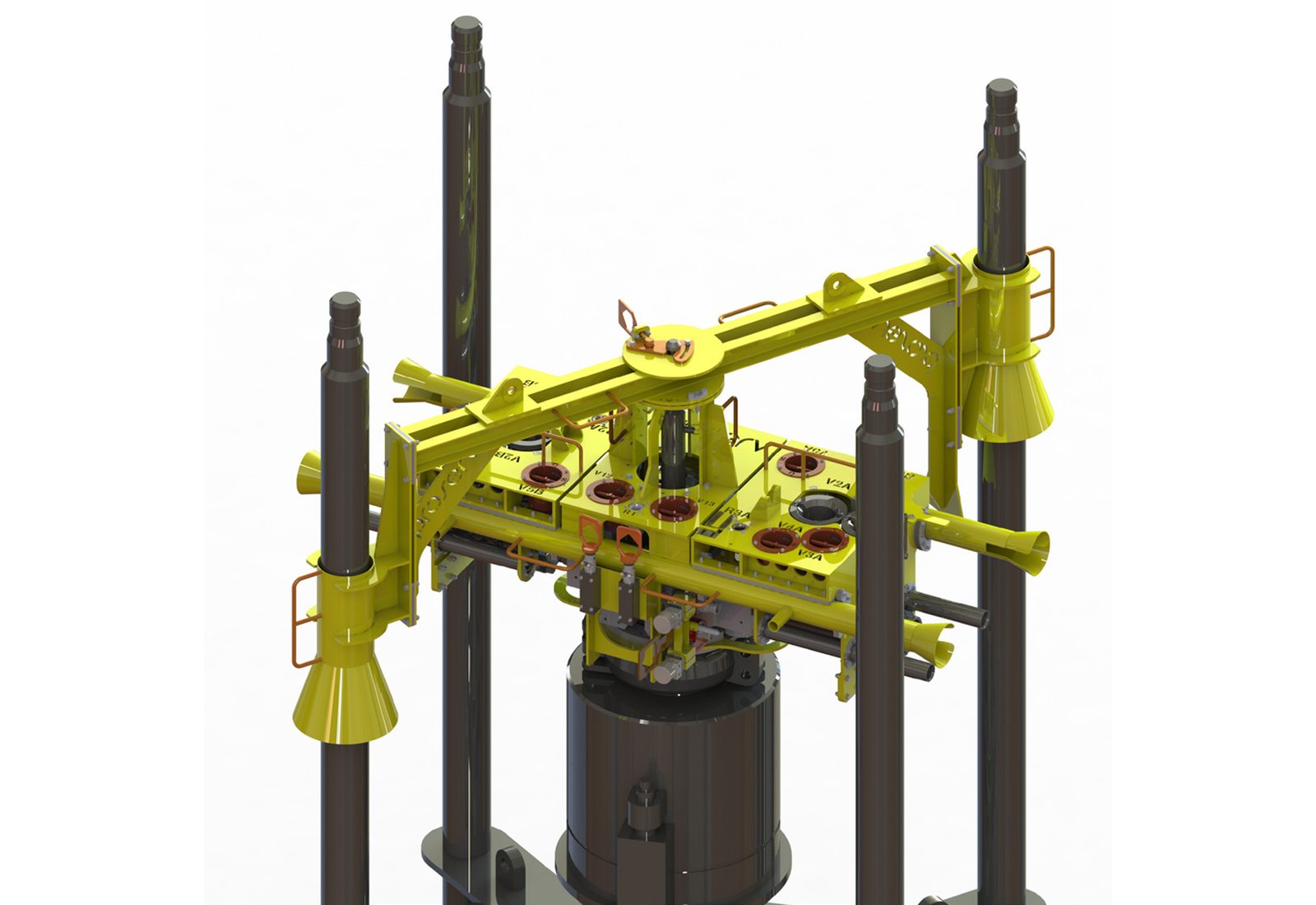
We were approached to devise a method to deploy and install the required hot tap equipment onto two of the well caps, and to convert an existing top-side hot tap machine into one suitable for subsea deployment and operation by ROV. The final system comprised five elements.
- A tool that enveloped the large pressure-retaining clamp and provided the ability to open and close it, and to pressure test the seal against the cap once installed. This tool provided exacting alignment and guidance of the clamp over the cap while ensuring the sealing faces were not damaged.
- A deployment frame that interfaced with the original guide posts — fifty years old at that point — giving risk-free coarse alignment of the clamp assembly, with further features providing fine alignment as the assembly was lowered over the cap.
- High-torque hydraulic wrench assemblies used to sequentially tighten the clamp around the well cap.
- A neutrally buoyant structure that encased the hot tap machine and allowed it to be flown into place by the ROV. Control panels and monitoring features let the equipment be operated by the ROV while maintaining all the functionality and control of a top-side operation.
- Bespoke transport and deployment skids that doubled as service centres, allowing even major components to be removed and replaced offshore.
The first of its kind
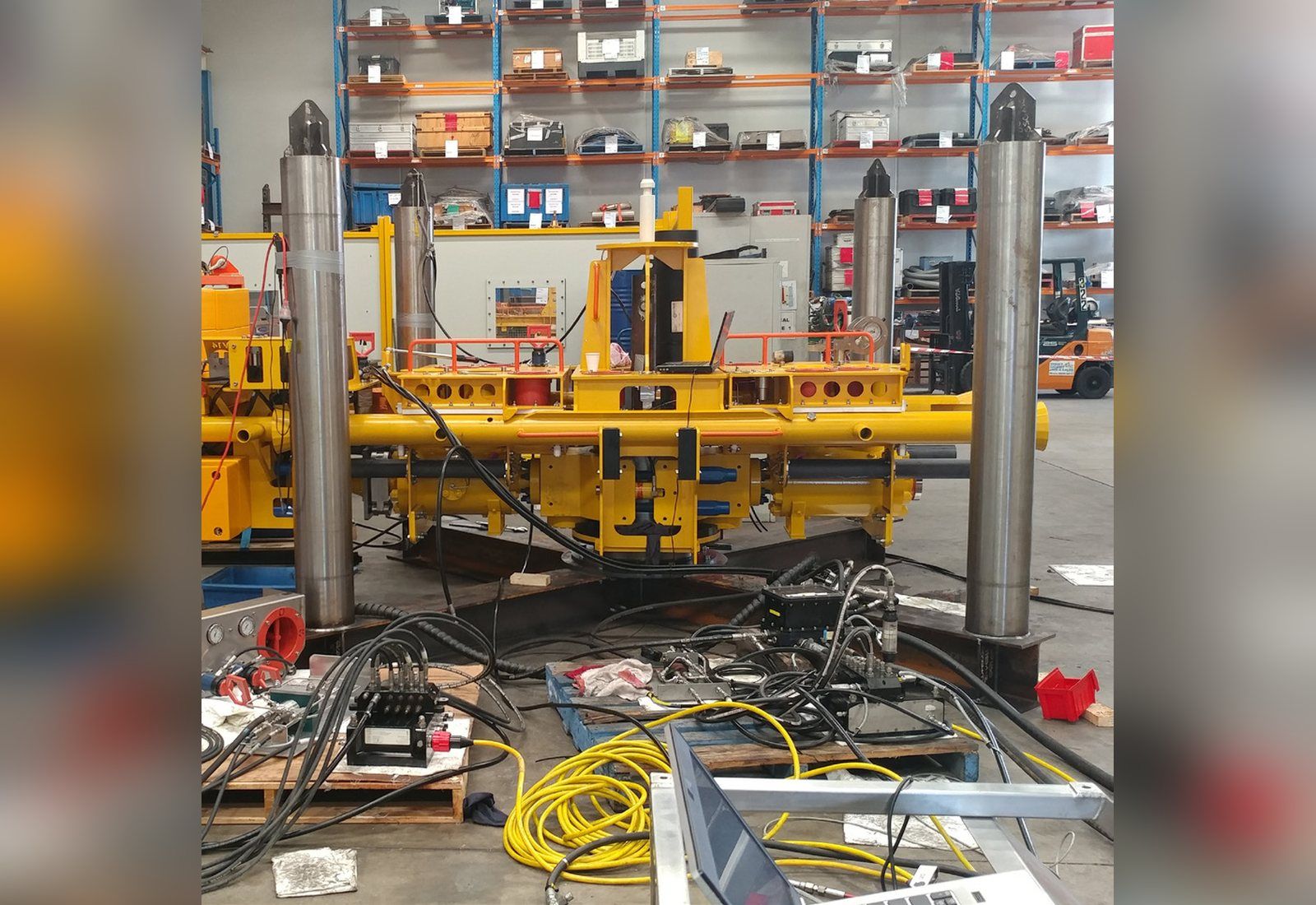
This was the first fully remote, small-bore, high-pressure hot tap conducted through a subsea well cap. Nothing existing was suitable: the system had to be designed from the requirement rather than adapted from a catalogue, and a fully qualified and thoroughly tested system was delivered eight months after go-ahead.
Outcome
Offshore operations were completed in early April 2018, with all equipment performing as designed.
Delivered under our former name, Proserv Australia.
Operations SupportHave Something With the Same Shape?
If the constraint above looks like yours, ring us and ask how it went. That is a shorter conversation than a capability statement.
Start a Conversation